Thursday, 28 May 2026
Academy welcomes Senate report on microplastics

Academy welcomes Senate report on microplastics and toxic chemicals
The Australian Academy of Health and Medical Sciences (AAHMS) has welcomed the FINAL REPORT of the Senate Community Affairs References Committee inquiry into the impacts of microplastics and toxic chemicals on human health, particularly the recommendation that the Australian Centre for Disease Control (CDC) work with the Academy to establish a national human biomonitoring program.
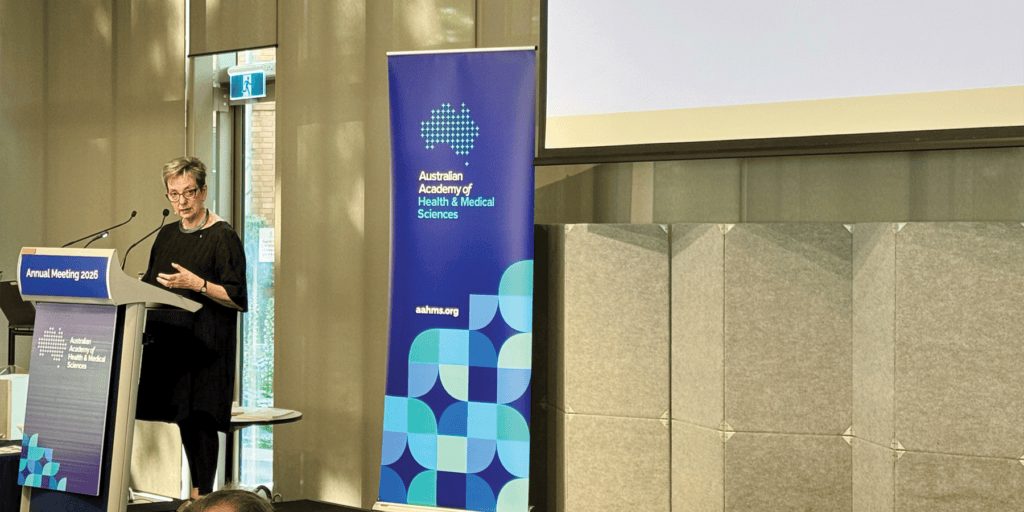
Academy President Professor Louise Baur AO FAHMS said the report represented an important step toward strengthening Australia’s ability to understand and respond to emerging environmental health risks.
“The committee has recognised that Australia urgently needs a coordinated national approach to monitoring human exposure to microplastics, PFAS and other persistent contaminants,” Professor Baur said.
“As the Academy outlined in the comprehensive MICROPLASTICS EVIDENCE BRIEF that it submitted to the inquiry, a national human biomonitoring program is essential public health infrastructure. Without it, Australia is unable to track exposure trends, identify vulnerable communities, understand potential health impacts, or develop evidence-based prevention strategies.”
Professor Baur noted that this is now the second Senate inquiry committee to recommend that the Australian Government work with the Australian Academy of Health and Medical Sciences to develop and implement a national human biomonitoring program, following the 2025 Senate inquiry into PFAS.
Professor Baur added that the Academy was encouraged to see many of its key findings and recommendations reflected in the committee’s final report.
“It is very encouraging to see the committee recognise the importance of rigorous, evidence-based advice in responding to these complex and evolving public health challenges”, Professor Baur said.
“As Australia’s only independent learned academy for the health and medical sciences, AAHMS brings together the nation’s leading experts to provide impartial, multidisciplinary advice to government.”
“The final report of the inquiry into microplastics reinforces the vital role that evidence-informed policy must play in protecting the health of current and future Australians.”
The Academy welcomed the committee’s adoption of a precautionary public health approach in circumstances where scientific uncertainty remains but plausible risks are increasingly evident.
“Human exposure to these contaminants is chronic, cumulative and difficult to measure,” Professor Baur said.
“The report appropriately recognises that uncertainty should not delay action where there is credible evidence of potential harm particularly for vulnerable populations including pregnant women and children, and some First Nations communities.”
The committee’s report reflects Academy’s analysis of plausible EVIDENCE regarding plausible links between exposure to microplastics, PFAS and related contaminants and a range of potential health impacts, including endocrine, immune dysfunction, reproductive and developmental harms, metabolic disease and cancer risk.
Academy media contact: Khaled Chakli: [email protected] (0423 099 568)
AAHMS
Related Publications
Academy sets out priorities for strengthening trust in health and medical expertise