Tuesday, 14 April 2026
Microplastics precaution and biomonitoring needed
New Academy evidence brief calls for precautionary action and national biomonitoring of microplastics and other contaminants
The Australian Academy of Health and Medical Sciences has today released a new evidence brief, Microplastics, forever chemicals and other contaminants, as national attention intensifies on the possible human health impacts of micro- and nanoplastics (MNPs), PFAS and related contaminants.
The release comes amid an evolving national conversation on these substances, growing public concern, and increased policy attention, including the current Senate inquiry into the impacts of microplastics, toxics and forever chemicals on human health.
The Academy’s brief provides an independent assessment of the current science, setting out what is known, what is indicated by emerging evidence, and what remains uncertain.
The brief finds that microplastics, PFAS and other contaminants are present across the environment and in human bodies, and that exposure can often lead to bioaccumulation. At the same time, it concludes that major scientific limitations remain, particularly in the detection and measurement of smaller MNPs, making it difficult to establish clear causal links between exposure and disease or to identify safe levels of exposure with confidence.
While the evidence base continues to evolve, the brief identifies biologically plausible pathways through which some contaminants may contribute to adverse health outcomes, including endocrine disruption, inflammation and oxidative stress. It argues that uncertainty should not be a reason for inaction, and that precautionary policy responses are warranted now.
A central recommendation of the brief is that Australia establish a National Human Biomonitoring Program to track PFAS and other contaminants that can already be accurately measured, with MNPs to be incorporated as measurement techniques improve. The Academy argues that such a program is necessary to build the large-scale, longitudinal evidence base needed to better understand population exposure and possible links to health outcomes. The brief also recommends an interim biomonitoring stream for pregnant women as an efficient first step while the broader national program is developed.
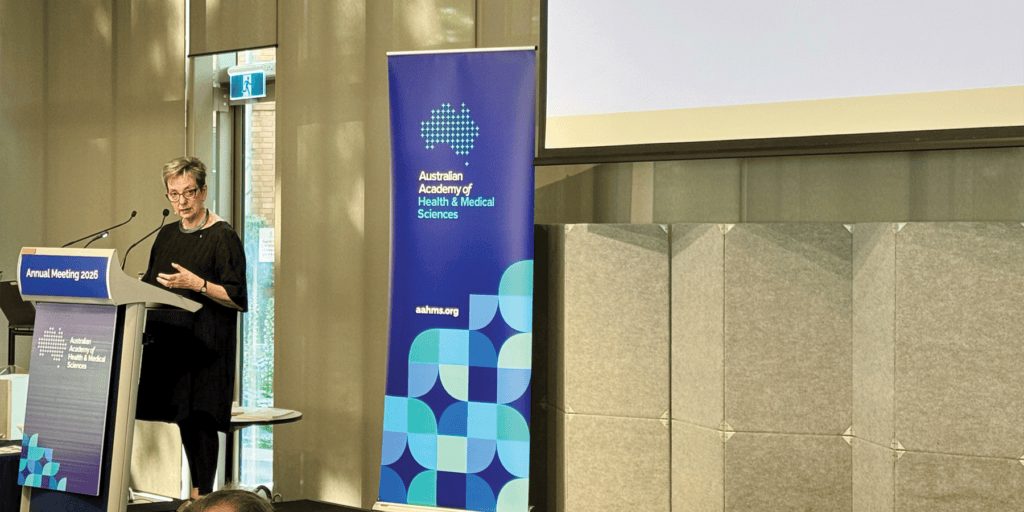
Professor Louise Baur AM, President of the Australian Academy of Health and Medical Sciences, said the brief was intended to bring scientific clarity to an issue of growing public and policy concern.
“Community concern about microplastics and related contaminants is understandable, but the science is still developing.”
“What we do know is that these substances are present in the environment and in human bodies. What we do not yet know with enough certainty is the extent to which many of them, particularly smaller micro- and nanoplastics, are contributing to specific health outcomes.”
Professor Baur said Australia now needed to invest in the systems that would allow those questions to be answered properly. “If Australia is serious about understanding the health implications of these contaminants, we need a national human biomonitoring program. Without it, we will continue to debate these issues without the population-level evidence needed to guide sound policy.”
The Academy noted that it has been calling for a national human biomonitoring program since 2024, and that the Senate Select Committee on PFAS recommended in 2025 that the Australian Government consult with the Academy and other stakeholders on the design of a national longitudinal chemicals biomonitoring program. Today’s evidence brief builds that case further and foreshadows a forthcoming Academy publication focused specifically on the rationale and pathway for such a program in Australia.
In addition to calling for biomonitoring, the brief recommends a precautionary policy approach focused on four areas: building the evidence base, prioritising vulnerable populations, reviewing regulation as the science evolves, and supporting clear public information and practical exposure reduction where feasible.
Download the AAHMS evidence brief Microplastics, forever chemicals and other contaminants.
For media enquiries, please contact Khaled Chakli: 0448 754 065
AAHMS
Related Publications
Academy sets out priorities for strengthening trust in health and medical expertise